Chapter Ten – What Happened Three Years Earlier
After midnight, the stranger finally told her the part of his history he had withheld.
He had not merely worked with her fiancé.
They had once been close friends.
Very close.
They had built their first major project together when both were young enough to mistake ambition for invincibility.
“We were almost brothers,” he said.
The bride watched his expression carefully.
“What changed?”
“Success.”
“That simple?”
“No.”
He smiled faintly.
“But that short.”
As money increased, decisions became larger.
So did the consequences of dishonesty.
The stranger discovered that his friend had been using separate agreements to promise incompatible things to different people.
Investors were told one version.
Partners another.
Private relationships another still.
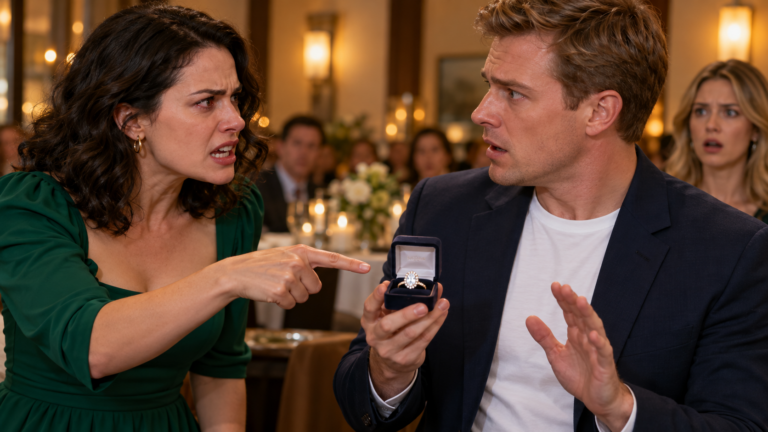
“Was the woman with the ring involved in the business?”
“Indirectly.”
“How?”
“She owned part of a property he wanted control over.”
The bride became still.
“And he was engaged to her.”
“Yes.”
“That sounds familiar.”
“Yes.”
“Did she sign something?”
The stranger looked toward the diamond ring.
“Yes.”
The bride’s stomach tightened.
“What happened?”
“She eventually challenged it.”
“Did she lose everything?”
“No.”
The bride released a breath.
“But she nearly did.”
The stranger nodded.
“She left him afterward.”
“And the ring?”
“She returned it.”
Silence.
The bride stared at the diamond.
“It was returned.”
“Yes.”
“And he kept it.”
“Apparently.”
“Then gave it to me.”
“Yes.”
She pressed her lips together.
There was something almost unbearable about that detail.
Not because jewellery needed to be new.
But because he had invented a story around it.
Made for you.
Chosen for you.
No one before you.
The lie had not been necessary.
That made it worse.
The stranger watched her.
“I’m sorry.”
This time she did not stop him.
“Thank you.”
She rested her head against the back of the velvet chair.
“I keep thinking about tomorrow.”
“What about it?”
“Everyone will want an explanation.”
“You don’t owe everyone one.”
“My family will.”
“Maybe.”
“My friends.”
“Maybe.”
“Him.”
The stranger paused.
“Him, eventually.”
She turned.
“You think I should speak to him.”
“I think unfinished things have a way of following people.”
“That sounds like experience.”
“It is.”
She studied him.
“Did you ever speak to him after your partnership ended?”
“Once.”
“What did he say?”
“That I misunderstood.”
She laughed bitterly.
“Of course.”
“He was persuasive.”
“Did you believe him?”
“For almost an hour.”
The bride smiled faintly.
“And then?”
“I realised every explanation required me to doubt something I had seen with my own eyes.”
Her expression changed.
That sentence stayed with her.
She thought of the corridor.
The documents.
The ring.
The pattern.
How much of herself would she need to distrust in order to make his explanation comfortable?
The question frightened her.
But it also gave her clarity.
She looked at the man beside her.
“Why do I feel safer with someone I met tonight than with the man I was supposed to marry?”
He did not answer quickly.
“Because I have nothing to gain from controlling your answer.”
The bride’s heart tightened.
Their hands were still close.
Not touching now.
But the space between them no longer felt neutral.